Launch offer — valid today only

📄 Digital book in PDF · read it on your phone or print it

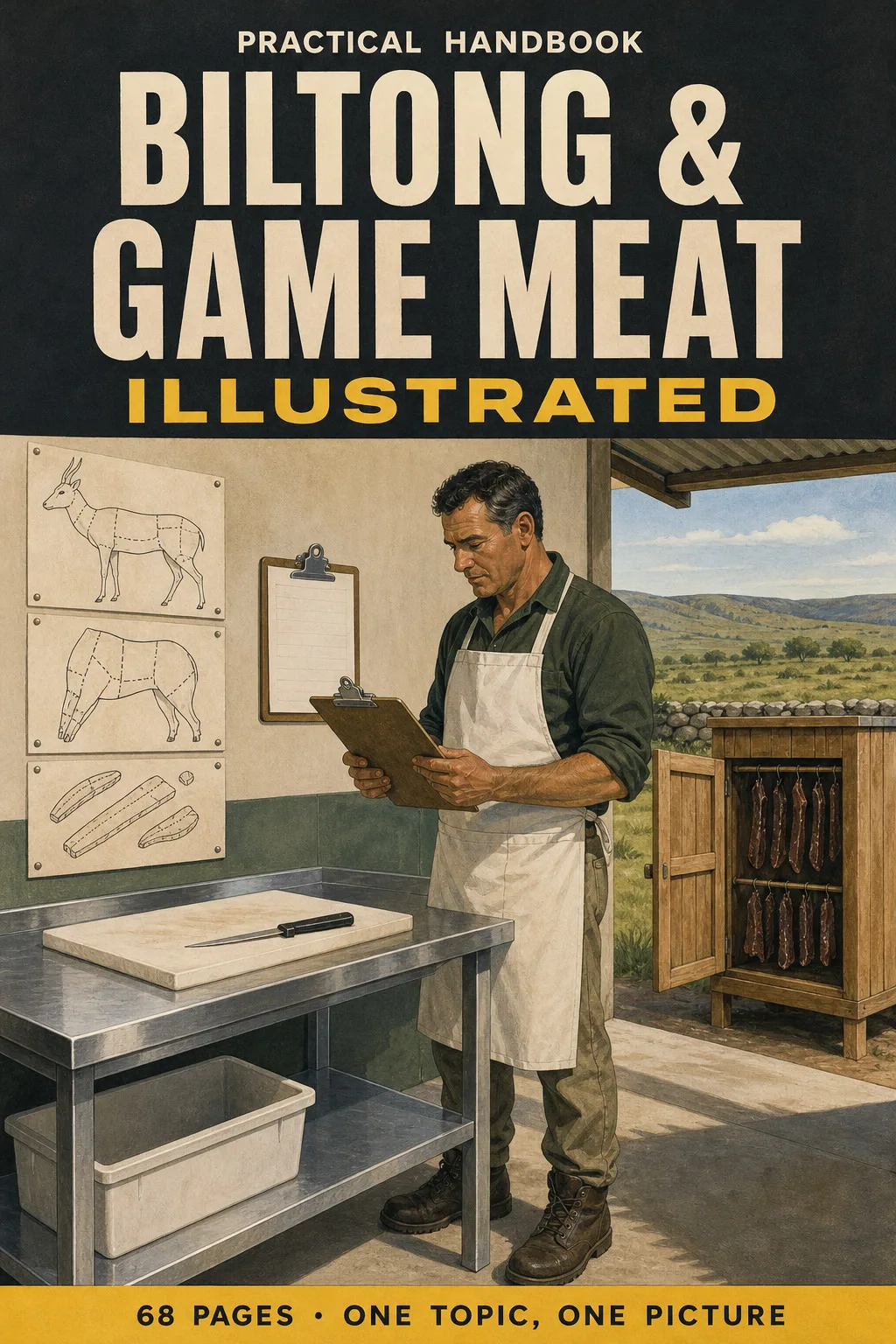
Home Game Processing and Biltong, Illustrated Bone Out by the Seams, Salt by the Gram

Hanging, skinning, muscle maps for kudu, springbok, impala and blesbok, seam boning, strips cut with the grain, salt and spice by the gram, drying and troubleshooting. Each topic has its own page: the drawing first, then what you need to remember. 68 illustrated pages.

YES, I WANT THE ILLUSTRATED BOOK

🔒 Secure checkout · PDF by email · 30-day guarantee

Every topic, its own pageEach step drawn, with the explanation alongside
68 illustrated pages9 parts, from the whole route on one page to the garage-day batch checklist
Up-to-date sourcesWritten for South African game, in metric, with reference to the Meat Safety Act 40 of 2000 and Regulation 638 on food premises hygiene
PDF by emailFormat

Look Inside the Book

Each page has one large drawing and a box with the millimetres, grams per kilo and steps you need:

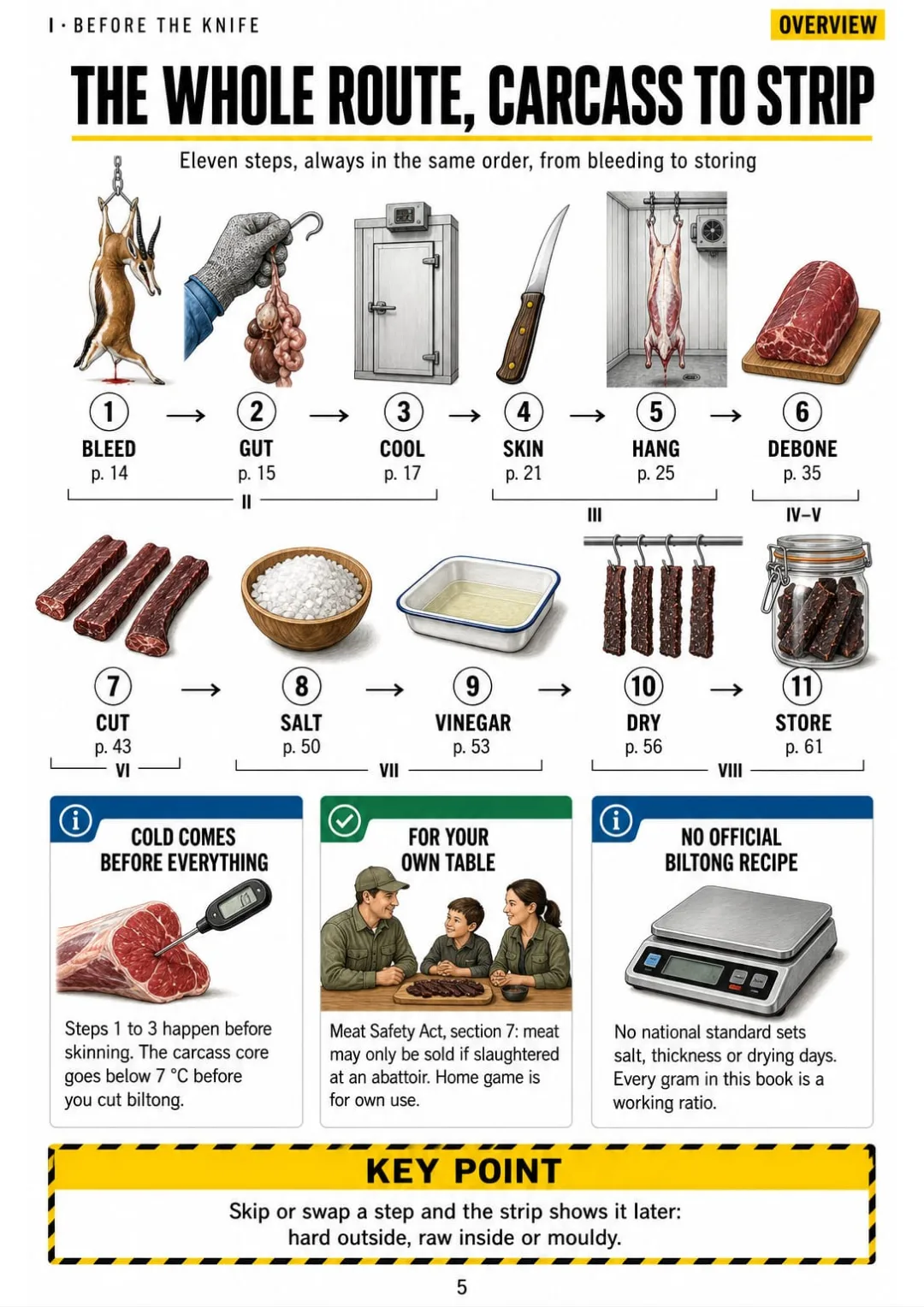
Bleed, gut, cool, skin, hang, debone, cut, salt, vinegar, dry, store: one page, eleven steps.
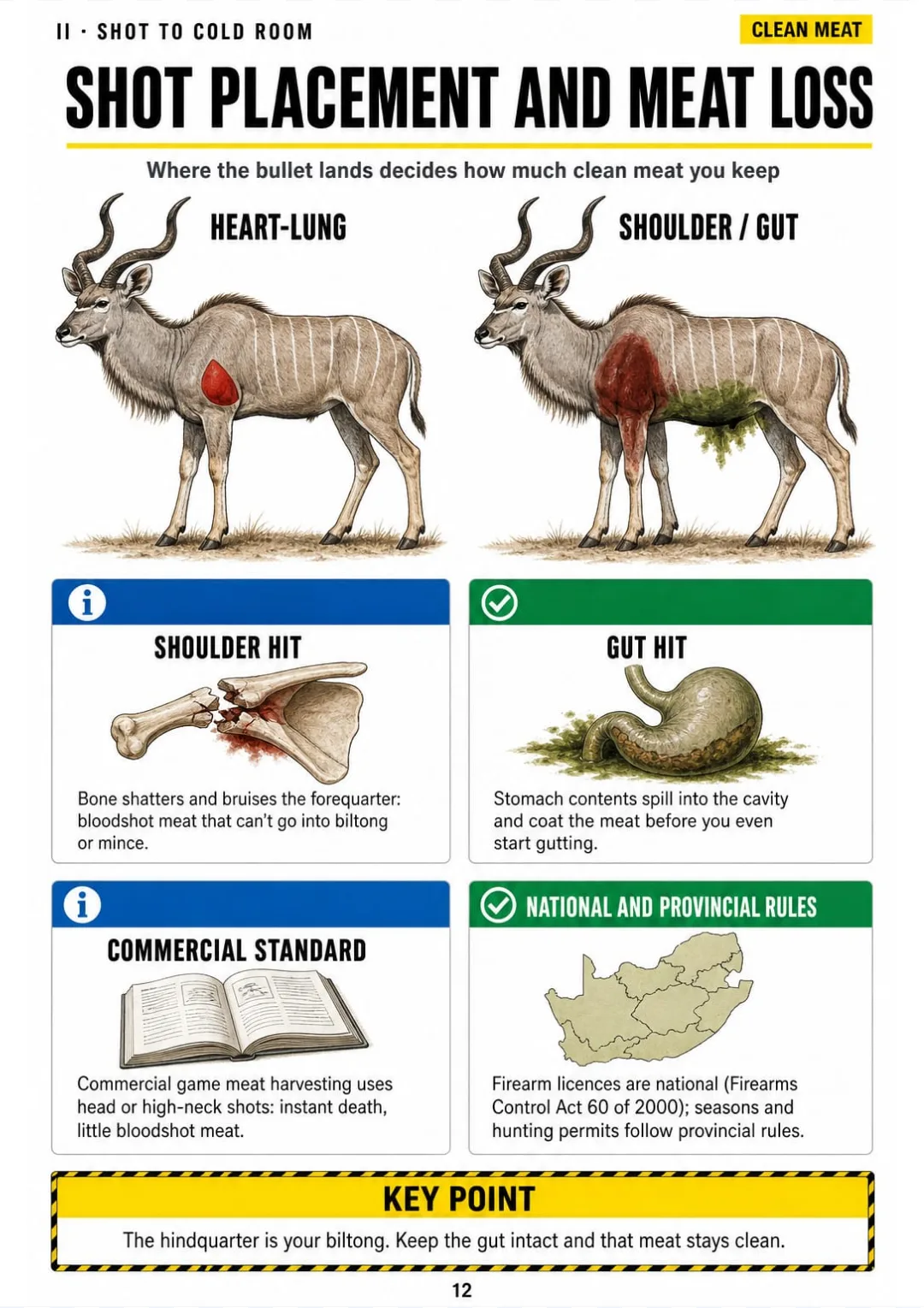
Heart-lung vs shoulder or gut: the bloodshot meat and contamination each one leaves
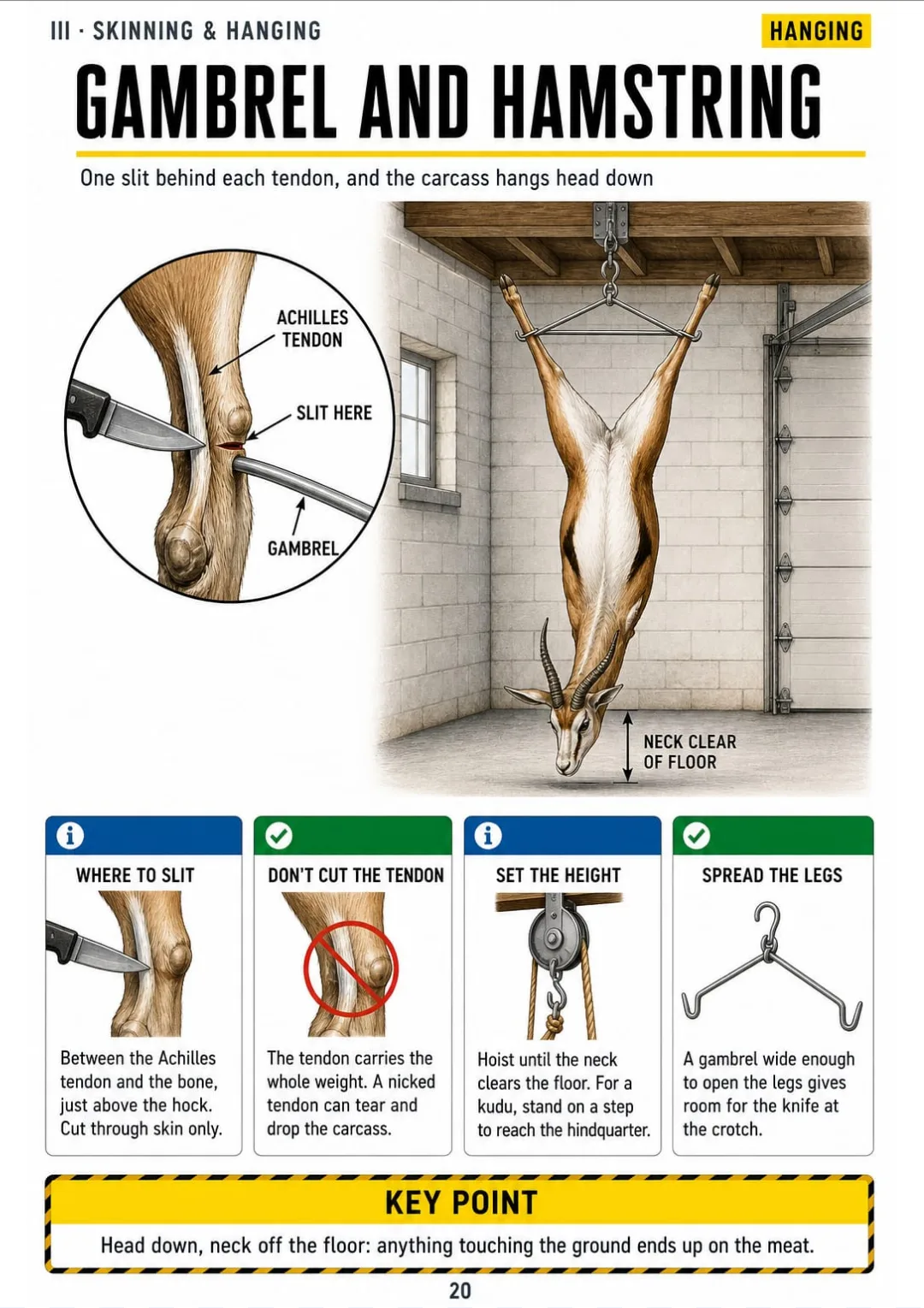
Slit behind the Achilles tendon, gambrel through, neck clear of the floor.
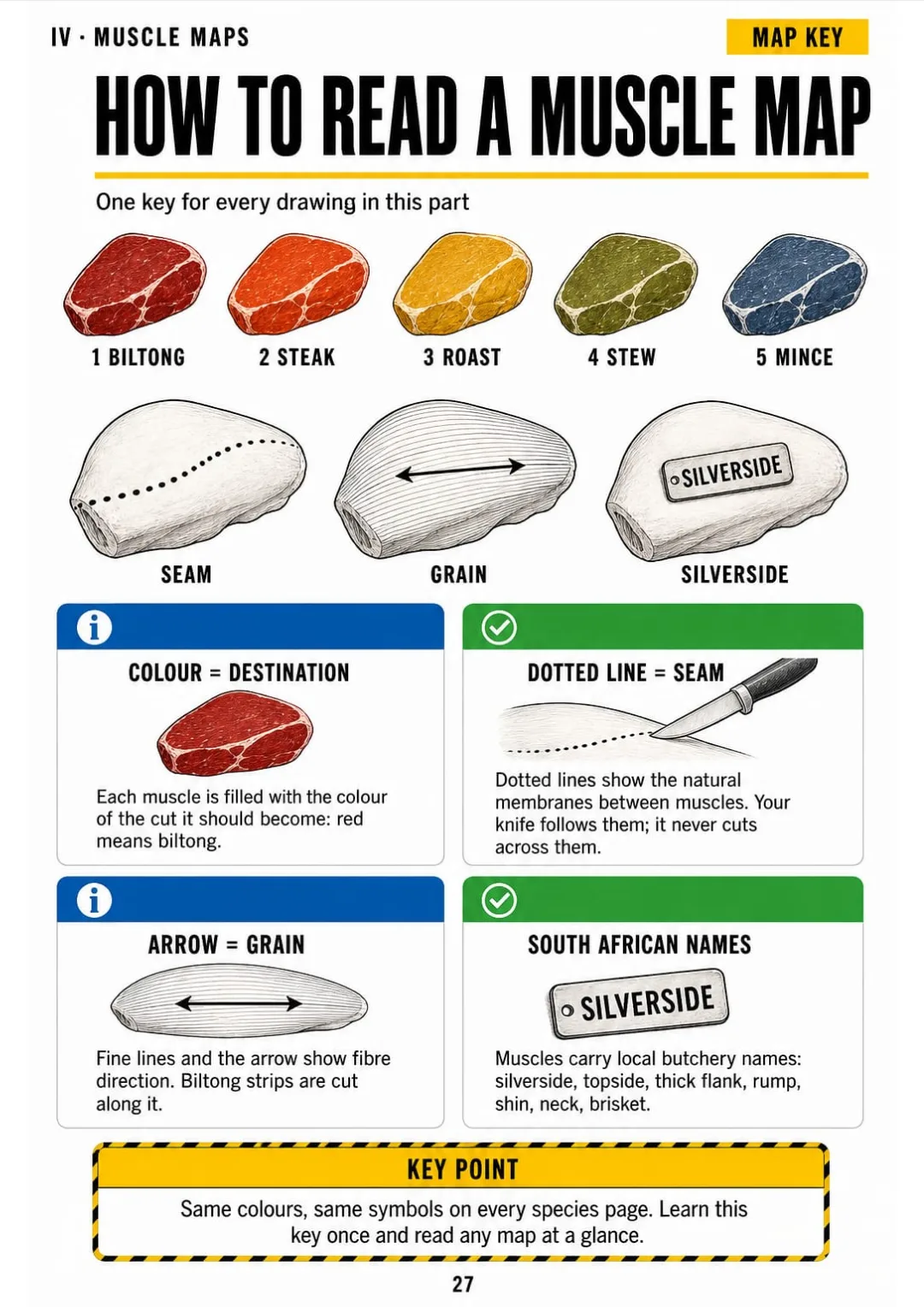
Five colours, one dotted seam line, one grain arrow: the key to every map
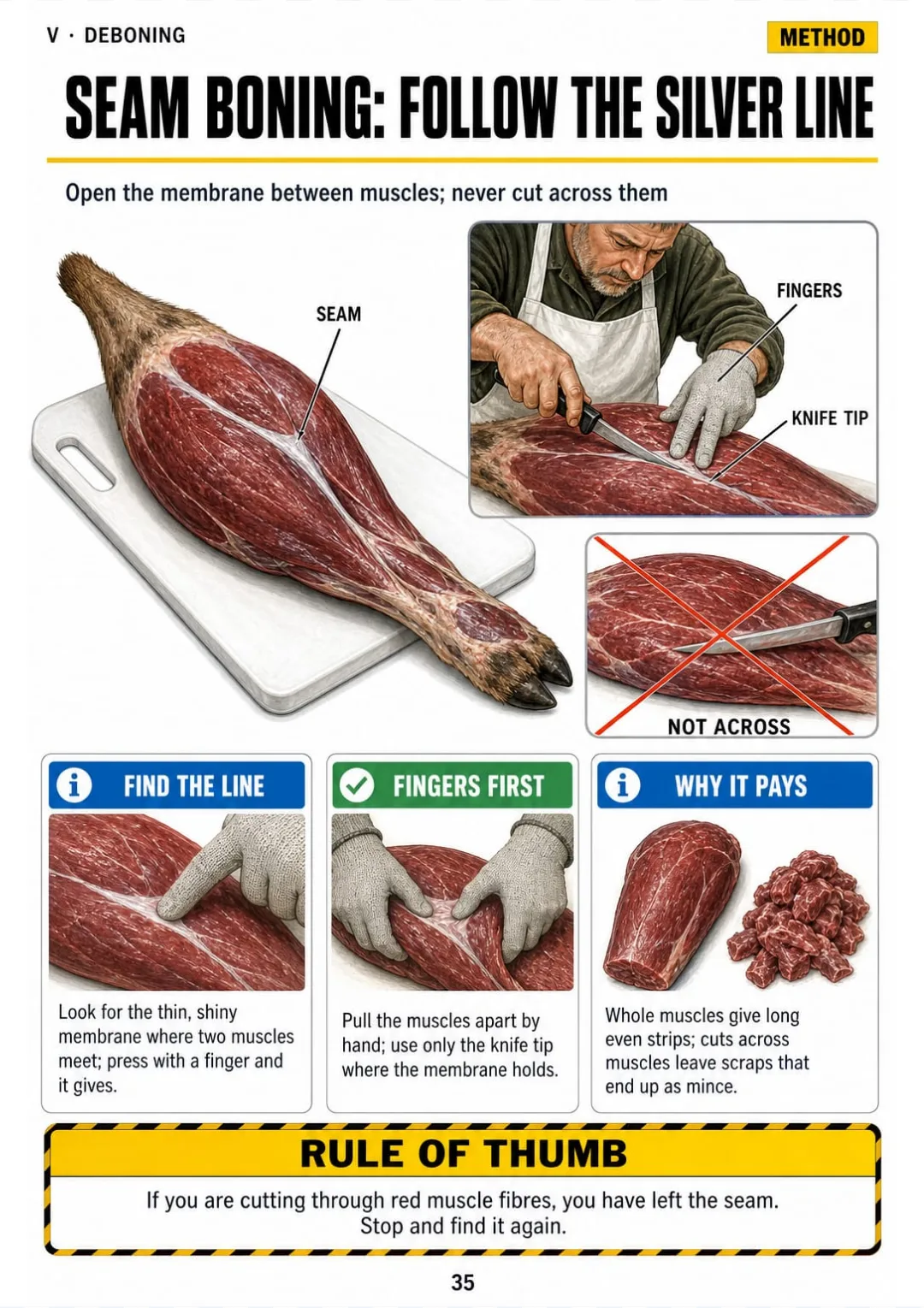
Seam boning: fingers open the membrane, the knife tip only helps
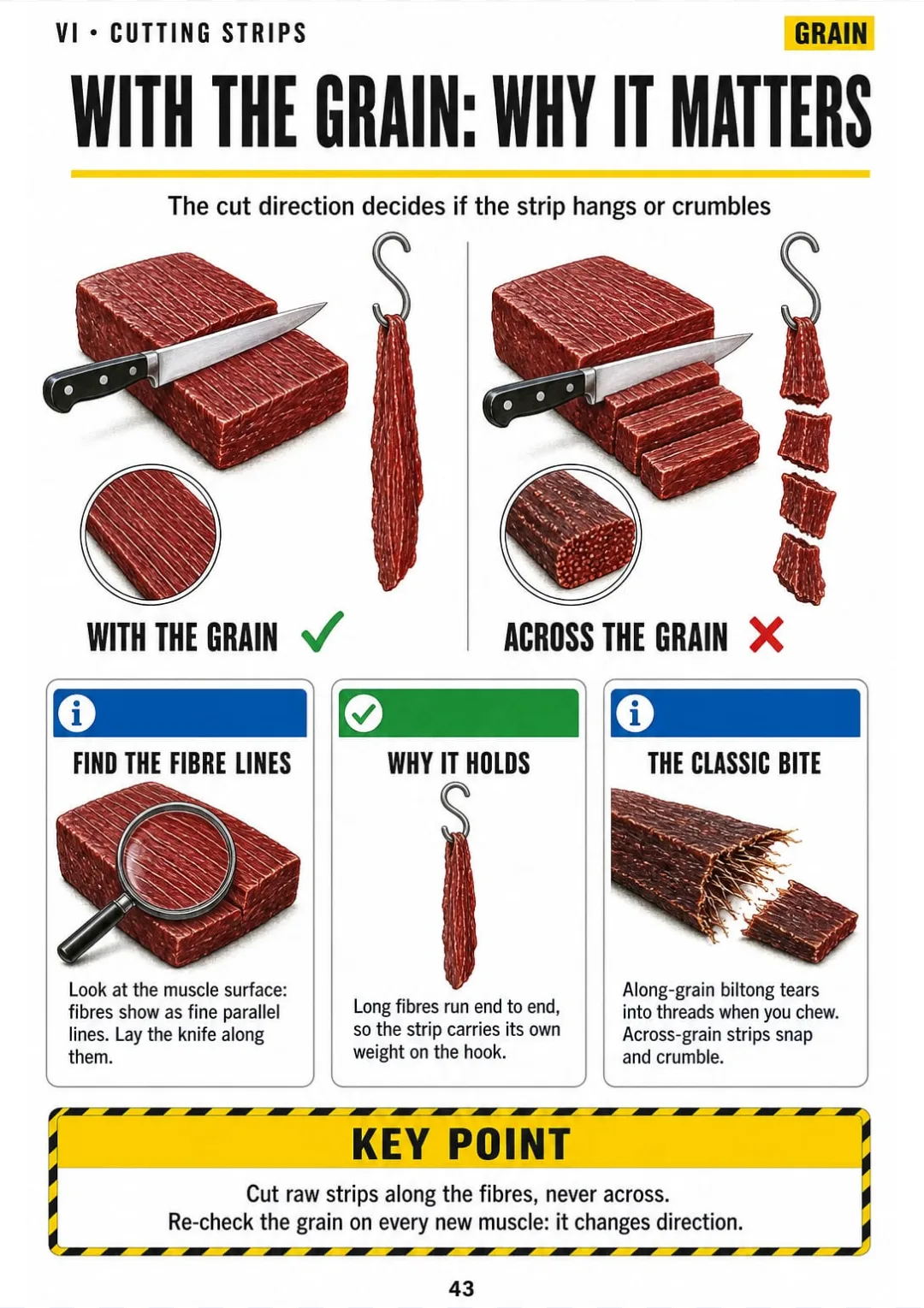
With the grain it hangs and tears; across the grain it crumbles off the hook.
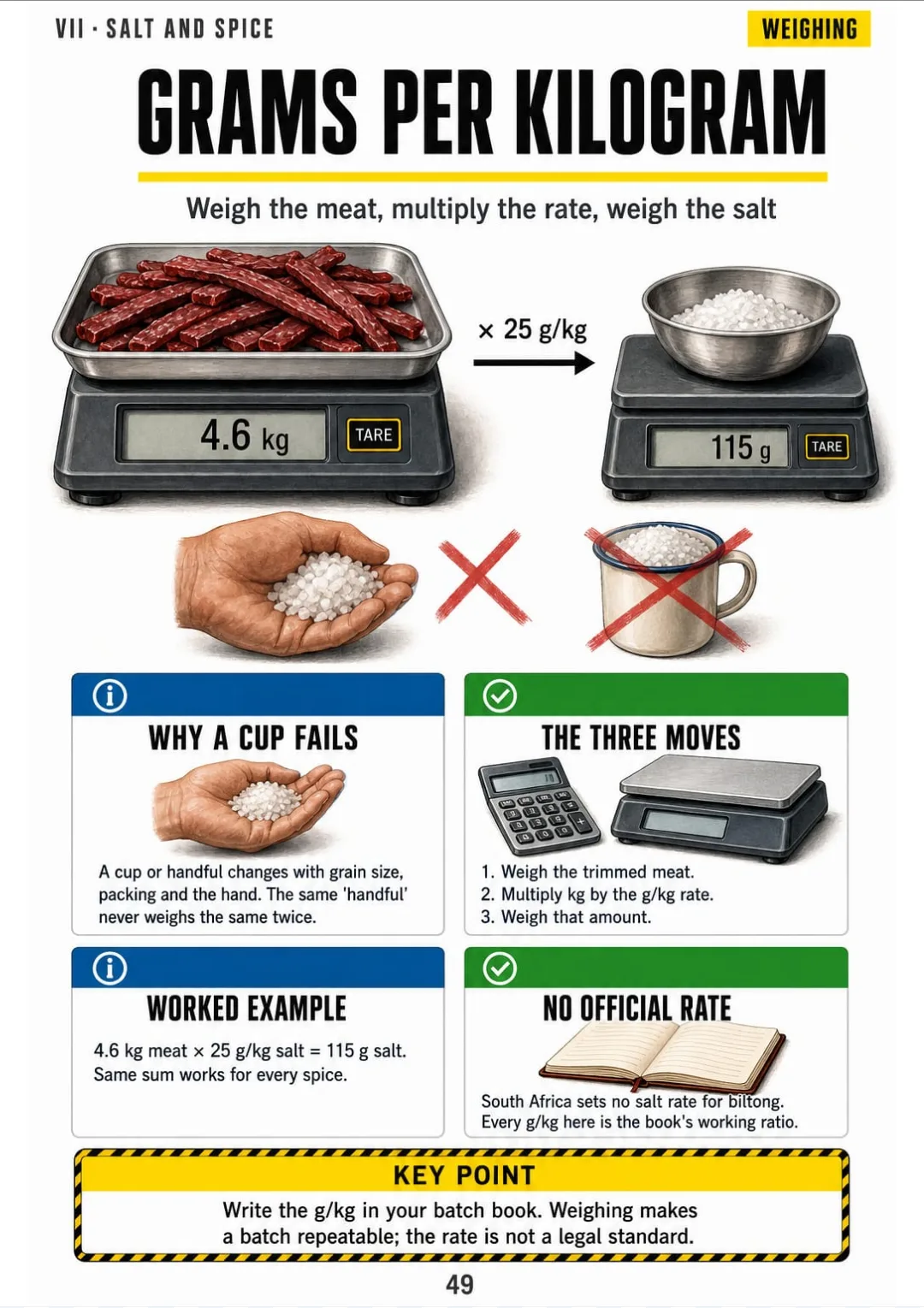
4.6 kg of meat × 25 g/kg = 115 g salt: the sum behind every repeatable batch.
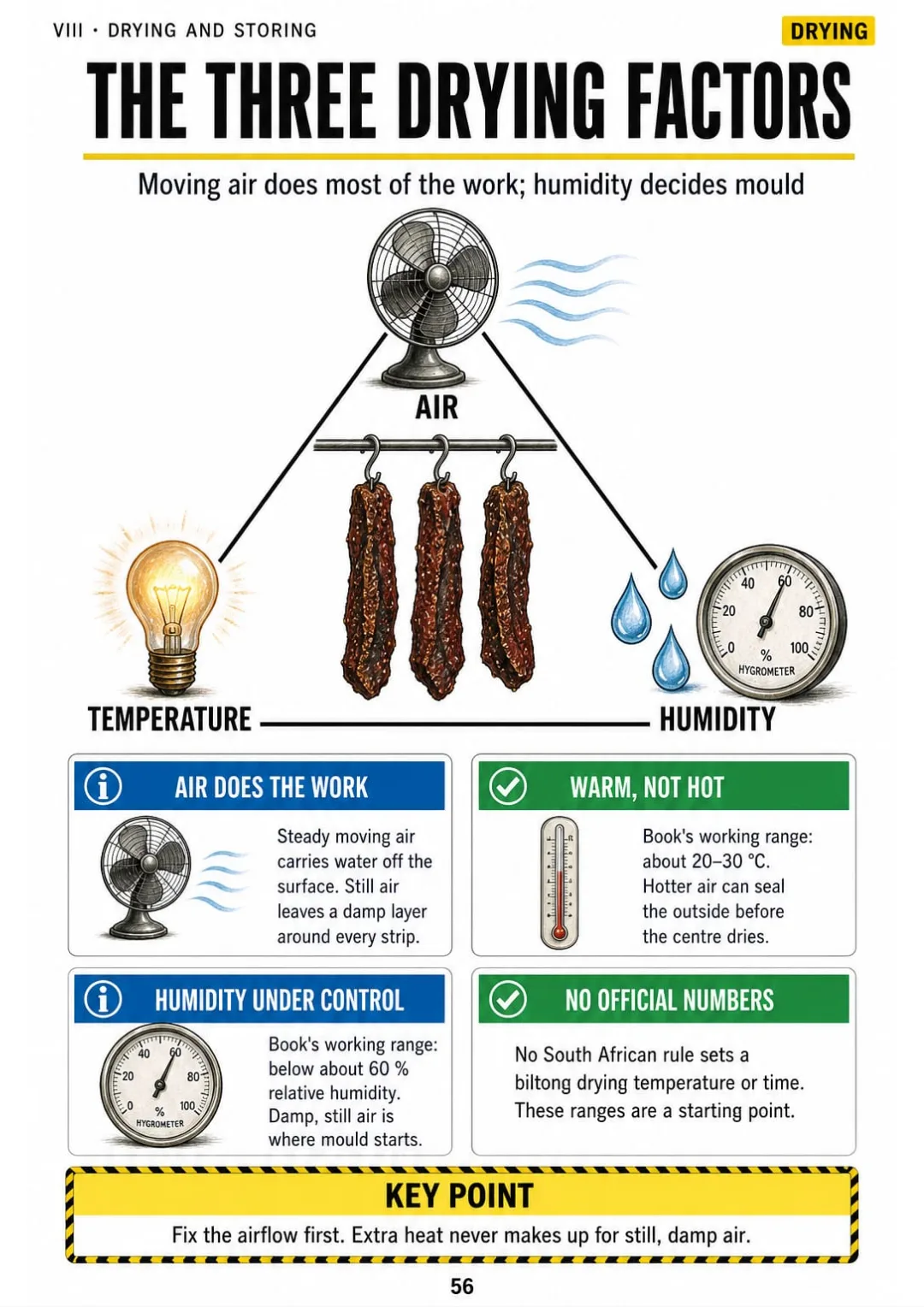
Air, warmth, humidity: working range about 20–30 °C and below 60 % humidity

Swipe to see more →

These are real pages from the book. The table of contents is the full one: 9 parts and 64 topics.

The Problem Isn't You. It's How You Were Shown.

The first strip comes off the hook: hard outside, still wet in the middle. Last year's batch was perfect, and you're not sure what changed.

Your father's recipe says a handful of salt and 'until it's dry'. How many grams per kilo, how thick the strip, how much air: nobody ever wrote it down.

Slit behind the Achilles tendon, gambrel through, neck clear of the floor.

In the book, drying is one page: air, warmth and humidity, each drawn, with about 20–30 °C and below 60 % humidity in the box.

The first skinning cuts, splitting the carcass, the kudu muscle map, seam boning and strip thickness in millimetres each have their own page too.

You see it, you understand it, and you hang the next animal without going back to the book.

COMPARE FOR YOURSELF

The Same Topic, Two Ways to Learn It

THIS
  • The manual: line after line
  • Shot placement and meat loss explained in words only
  • You get to the garage still unsure
Projectile placement exerts a determining influence upon the proportion of the carcass subsequently recoverable for human consumption. Placement within the thoracic cavity, involving the heart and lungs, is generally associated with limited haemorrhagic infiltration of the adjacent musculature, whereas placement in the shoulder region results in extensive bloodshot tissue requiring excision, and abdominal placement carries an elevated risk of contamination of carcass surfaces by gastrointestinal contents, necessitating prompt evisceration and rigorous trimming of all affected areas prior to any further processing.
FOR THIS
  • Shot placement and meat loss in one drawing
  • The damaged areas marked in a labelled box
  • You see it and you get it
Heart-lung vs shoulder or gut: the bloodshot meat and contamination each one leaves
CONTENTS

Take a Look at the 9 Parts and 64 Topics

Before the knife, from the shot to the cold room, skinning and hanging, muscle maps by species, seam boning, cutting strips, salt and spice by the gram, drying and storing, troubleshooting and checklists: 68 pages, all illustrated.

IBefore the Knife Touches Meat · pp. 5-11
  1. The Whole Route on One Page: Carcass to Dry Strip
  2. Why Biltong Goes Wrong: Four Causes
  3. The Cold Chain: One Number Above All
  4. Your Garage or Lapa as a Work Area
  5. The Knife Kit: Five Knives and a Steel
  6. A Sharp Edge in Three Steps
  7. Personal Safety and Zoonoses
IIFrom the Shot to the Cold Room · pp. 12-19
  1. Shot Placement and Meat Loss
  2. Bullet Fragments Around the Wound
  3. Bleeding Out Within Minutes
  4. Gutting in the Field, Step by Step
  5. Signs to Check While Gutting
  6. Cooling Fast in the Heat
  7. Transport: Clean, Cool, Separate
  8. Chiller Temperature and Humidity
IIISkinning and Hanging · pp. 20-26
  1. Hanging Point: Gambrel and Hamstring
  2. Skinning Cuts: The First Lines
  3. Pulling the Hide Without Tearing Meat
  4. Hair Is the Enemy: Keeping the Surface Clean
  5. Splitting the Carcass
  6. Hanging Time for Game
  7. Carcass Weight: Live, Dressed, Boned Out
IVMuscle Maps by Species · pp. 27-34
  1. How to Read a Muscle Map
  2. The Hindquarter: Four Big Muscle Groups
  3. Kudu Muscle Map
  4. Springbok Muscle Map
  5. Impala Muscle Map
  6. Blesbok Muscle Map
  7. Backstrap and Fillet: Not for Biltong
  8. Forequarter and Neck: Where They Go
VDeboning by Muscle Seam · pp. 35-42
  1. Seam Boning: Follow the Silver Line
  2. Removing the Hind Leg from the Pelvis
  3. Taking Off the Silverside
  4. Taking Off the Topside
  5. Taking Off the Thick Flank and Rump
  6. Sinew, Silverskin and Glands
  7. Sorting the Pile: Biltong, Steak, Stew, Mince
  8. Packing Meat You Won't Dry Today
VICutting Biltong Strips · pp. 43-48
  1. With the Grain: Why It Matters
  2. Strip Thickness in Millimetres
  3. Strip Length and Width
  4. Even Strips from an Uneven Muscle
  5. Fat or No Fat on the Strip
  6. Firming the Meat to Cut Clean
VIISalt, Spice and Vinegar by the Gram · pp. 49-55
  1. Grams per Kilogram: The Only Way to Repeat a Batch
  2. Salt: Type, Rate and Contact Time
  3. Coriander: Toast, Crack, Weigh
  4. Pepper, Sugar and Bicarb
  5. Vinegar Dip: Which and How Long
  6. The Layering Order in the Tray
  7. Your Father's Recipe, Converted
VIIIDrying and Storing · pp. 56-62
  1. The Three Drying Factors: Air, Temperature, Humidity
  2. Hanging: Hooks, Spacing, No Touching
  3. Home Drying Box Basics
  4. How Many Days: Reading the Strip
  5. Weight Loss as the Doneness Test
  6. Storing Finished Biltong
  7. Slicing and Portioning
IXTroubleshooting and Checklists · pp. 63-68
  1. Hard Outside, Raw Inside: Case Hardening
  2. White Bloom or Mould? How to Tell
  3. Too Salty, Too Bland, Spice Falls Off
  4. Common Processing Mistakes
  5. Season Checklist: Before the Trip
  6. Batch Checklist: Garage Day

One Page, One Topic, All Clear

Think of it this way:

The kudu hindquarter is on the table, the knife is sharp, and you need to know where the silverside ends and the topside begins.

You open the book at the kudu muscle map and see every muscle in its own colour, the seams dotted and an arrow showing the grain.

Seam boning: fingers open the membrane, the knife tip only helps

The same goes for the springbok, impala and blesbok maps, strip thickness in millimetres, salt in grams per kilo and the three drying factors: each one on its own page.

Biltong & Game Meat Illustrated is 9 parts and 64 topics, all drawn, with a troubleshooting section and two printable checklists at the end.

What you see drawn, you don't have to memorize.

What's Inside Biltong & Game Meat Illustrated:

Ipp. 5-11

Before the Knife Touches Meat

The whole route on one page, the four reasons biltong goes wrong, the cold chain, your garage or lapa as a work area, the knife kit and personal safety.

IIpp. 12-19

From the Shot to the Cold Room

Shot placement and meat loss, fragments around the wound, bleeding out, gutting in the field, what to check while gutting, cooling, transport and the chiller.

IIIpp. 20-26

Skinning and Hanging

The gambrel and hamstring, the first skinning cuts, pulling the hide cleanly, keeping hair off the meat, splitting the carcass, hanging time and carcass weights.

IVpp. 27-34

Muscle Maps by Species

How to read a muscle map, the four big hindquarter groups, maps for kudu, springbok, impala and blesbok, the backstrap and fillet, and the forequarter.

Vpp. 35-42

Deboning by Muscle Seam

Seam boning along the silver line, the leg off the pelvis, silverside, topside, thick flank and rump, sinew and glands, sorting the pile and packing.

VIpp. 43-48

Cutting Biltong Strips

Cutting with the grain, strip thickness in millimetres, length and width, even strips from an uneven muscle, fat or no fat, and firming the meat.

VIIpp. 49-55

Salt, Spice and Vinegar by the Gram

Grams per kilogram, salt rate and contact time, coriander, pepper, sugar and bicarb, the vinegar dip, layering order and your father's recipe converted.

VIIIpp. 56-62

Drying and Storing

Air, temperature and humidity, hooks and spacing, the home drying box, reading the strip, weight loss as the doneness test, storing and slicing.

IXpp. 63-68

Troubleshooting and Checklists

Case hardening, white bloom or mould, salt and spice problems, common processing mistakes, and the season and garage-day checklists.

At the end of the book: A troubleshooting section, two printable checklists and a page to turn your family recipe's handfuls and spoons into grams per kilo.
Plus: 2 Free Books

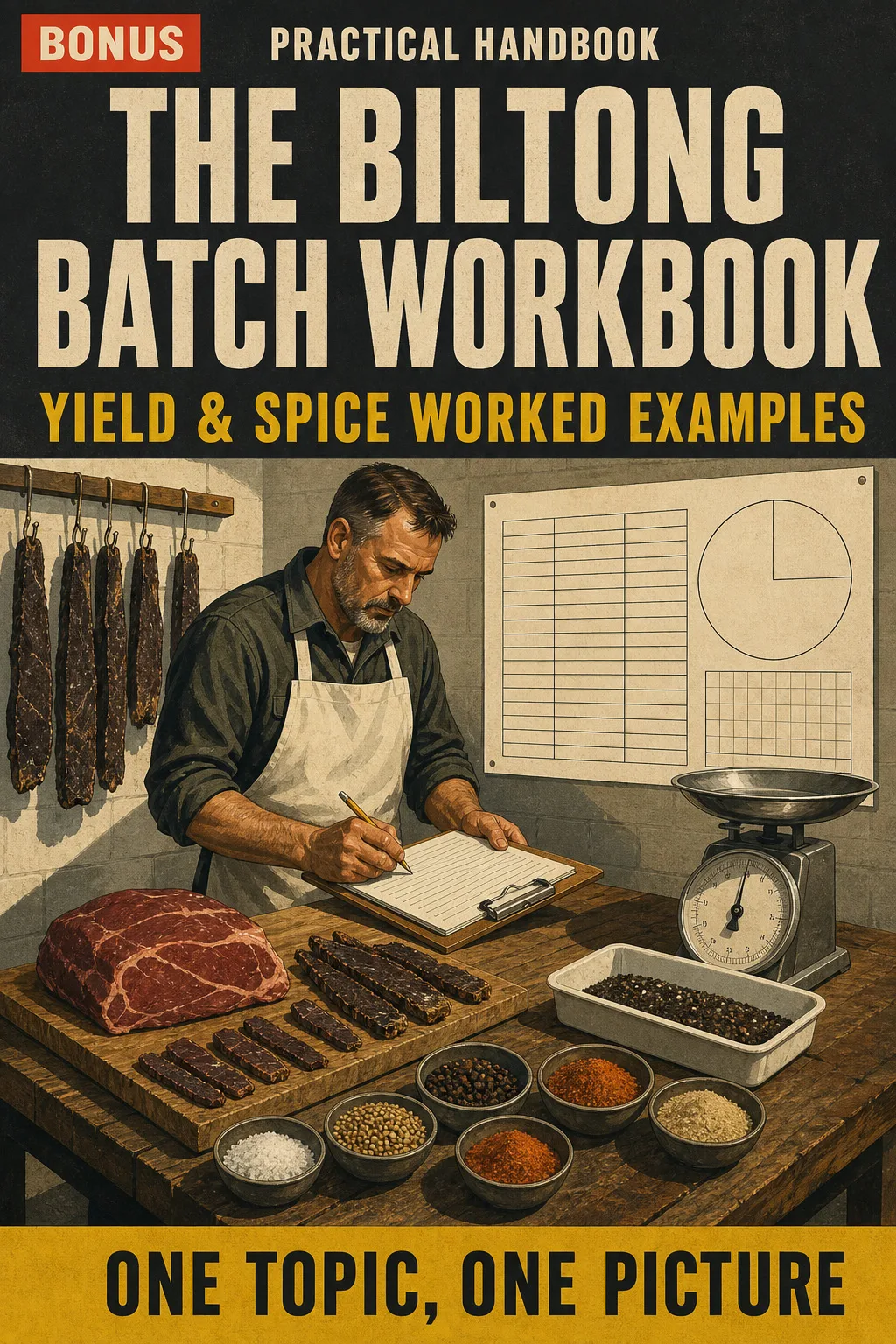
The Biltong Batch Workbook: Yield & Spice Worked Examples

BONUS 1: «The Biltong Batch Workbook: Yield & Spice Worked Examples»

Value on its own: US$ 17.90

Work out the salt, spice and finished biltong weight from the meat you actually have, with worked examples and blank sheets for your own batches.

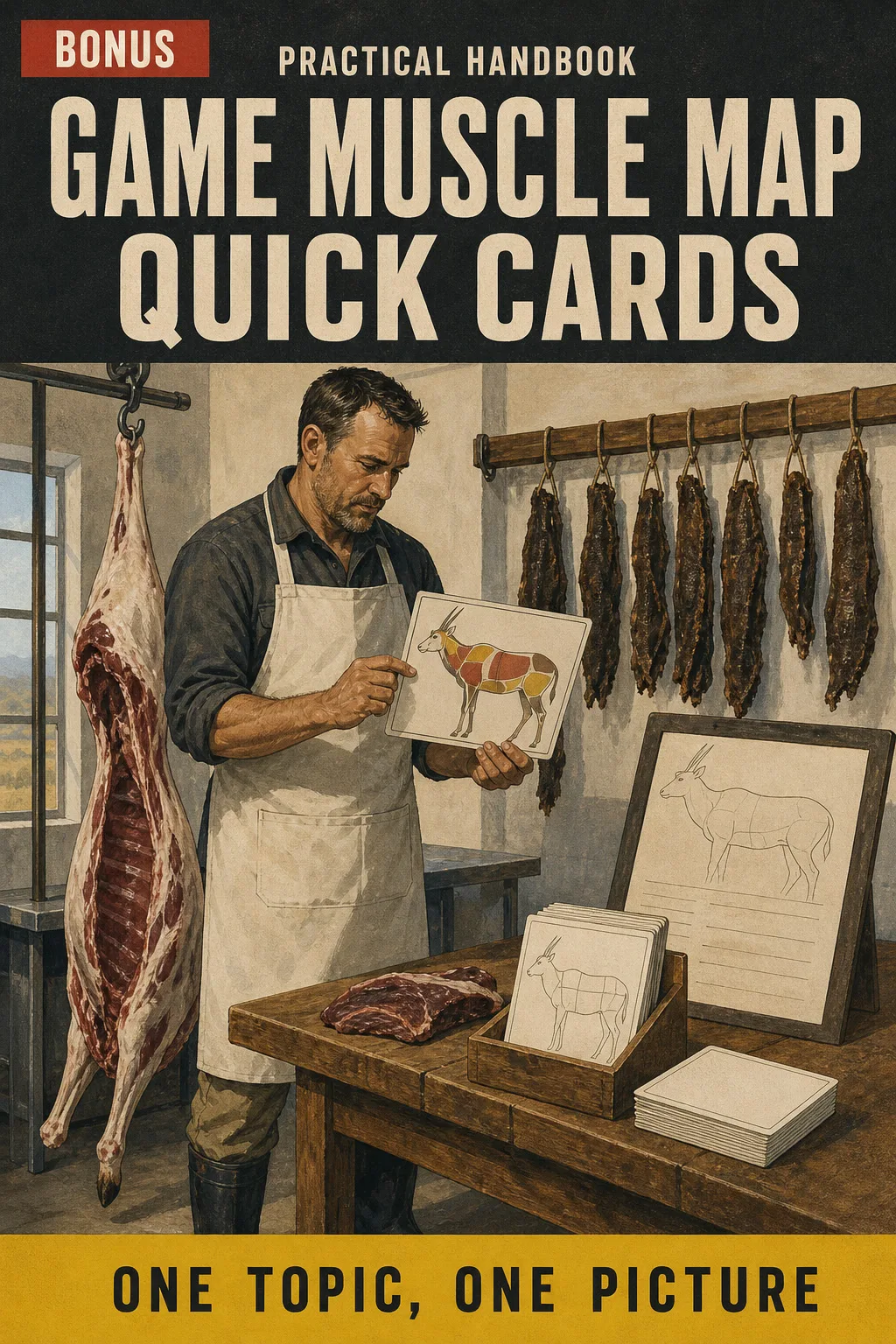
Game Muscle Map Quick Cards

BONUS 2: «Game Muscle Map Quick Cards»

Value on its own: US$ 14.90

One printable card per species with every muscle labelled, to pin up next to the cutting board and see at a glance where each cut starts and ends.

Biltong & Game Meat Illustrated with 2 Free Books

  • Biltong & Game Meat Illustrated: 68 illustrated pagesUS$ 63
  • BONUS 1: The Biltong Batch Workbook: Yield & Spice Worked ExamplesUS$ 17.90
  • BONUS 2: Game Muscle Map Quick CardsUS$ 14.90
  • High-resolution PDF to printIncluded
Total value US$ 95.80
YOUR PRICE:
US$ 27
You save US$ 68.80
YES, I WANT BILTONG & GAME MEAT ILLUSTRATED FOR US$ 27

📄 This is a digital PDF book sent to your email: nothing is printed or shipped.

Secure purchaseEncrypted payment30-day guarantee

PDF by email: We email you Biltong & Game Meat Illustrated as a PDF, together with the two free books. It's a single payment: no installments, no extra charges.

Who This Book Is For

Doing your first animal yourself

Doing your first animal yourself

Every step from the gambrel to the dry strip is drawn in working order, so you can follow it page by page instead of paying the processor.

The season is coming up

The season is coming up

The season checklist, the muscle maps and the knife pages let you get the kit and the garage ready before the trip.

Making biltong for years

Making biltong for years

The muscle maps, grams per kilo and the troubleshooting pages show why a batch comes out hard outside or with mould, and how to repeat the good ones.

Everything You Get Today

US$ 95.80US$ 27
YES, I WANT BILTONG & GAME MEAT ILLUSTRATED FOR US$ 27

📄 This is a digital PDF book sent to your email: nothing is printed or shipped.

30DAYS
GUARANTEE

30-Day Guarantee

Try Biltong & Game Meat Illustrated for 30 days, bonus books included.

We refund everything if the file won't open, if the book isn't what you see here, if you were charged twice or if the email doesn't arrive. Just email us.

You pay once. No subscriptions.

Frequently Asked Questions

Is it for me if I've been making biltong for twenty years?

Yes. It doesn't replace your experience or your father's recipe. It shows you how to weigh that recipe in grams per kilo, where each muscle starts and ends on the kudu, springbok, impala and blesbok maps, and why a batch comes out hard outside or with mould, so the good batches can be repeated.

Where does the content come from?

It's written for South African game (kudu, springbok, impala, blesbok), in metric, with reference to the Meat Safety Act 40 of 2000, the Department of Agriculture's guidance on game meat hygiene and Regulation 638 on food premises hygiene. Temperatures, times and grams per kilo are marked so you can check them against the current version.

Is it official material?

No. It's an independent illustrated book. The laws and guidance are cited for reference only, with no affiliation or endorsement.

Does it replace a course or hands-on training?

No. It's a reference for home processing for personal use. It doesn't replace hands-on training, a registered game meat processor or a vet's advice.

Is it for me if I've never processed an animal myself?

Yes. It starts with the whole route on one page and goes in working order, from the gambrel to the dry strip. Each page is one topic, with the drawing first and the millimetres and grams in a box.

When and how does it arrive?

The book and both gifts arrive as PDFs by email, to the address you enter at checkout.

Do I have to pay every month?

No. It's a one-off payment.

Can I have it on paper?

Yes. Print it at home or at a print shop and keep it in the garage or the lapa, next to the cutting board.

How does the refund work?

You have 30 days. We refund everything if the file won't open, if the book isn't what you see on this page, if you were charged twice or if the email doesn't arrive: just email us.

Before You Close This Page

No more cutting by eye and hoping.

Where the silverside ends, you see it drawn.

You walk into the garage knowing where everything is.

Drawings make studying faster.

The book is right below.

One-time payment: US$ 27 · Guarantee: 30 days · PDF by email

YES, I WANT BILTONG & GAME MEAT ILLUSTRATED FOR US$ 27

📄 This is a digital PDF book sent to your email: nothing is printed or shipped.